
My laptop camera catches me mid-sentence in a client call, and the little round thumbnail in the corner is doing something unflattering to my jawline, not video compression, just concealer sitting on top of a cluster that wasn't there the day before. I stopped treating that kind of moment as a skincare failure a while back. It's a digestion problem wearing my face as a billboard, and the gut-skin axis is the reason adult acne, digestive health, and probiotic testing all live in the same folder on my laptop now.
Before going further: this article contains affiliate links, including for SynoGut, and I earn a commission if you buy through them at no extra cost to you. I'm not a doctor, dietitian, or any kind of health professional, just a freelance graphic designer who tests supplements against her own skin and writes down what actually happens. Everything below comes from that log, not a lab.
The Topical Ten-Step That Didn't Fix My Adult Acne
Skincare was where I put all my effort for a long stretch, and none of it held. The specific low point was a ten-step Korean double-cleanse routine — oil, balm, essence, sheet mask, all of it — that I kept up for four months on the theory that more steps meant more control. My jawline didn't care about my discipline. The routine made my skin feel cared for and looked good lined up on a shelf, and did nothing whatsoever to the actual cysts underneath.
A friend with a naturopathic bent floated a different theory eventually: that skin was just reporting on something happening lower down, not causing it. That's the shift I've written about in more detail in looking beyond the topicals, so I won't retread the whole arc here. Short version: once I stopped treating my face like the crime scene and started treating my gut like the suspect, testing got interesting.
What's Actually Inside SynoGut
SynoGut was the first thing I tried that wasn't marketed as a single-strain probiotic. It's built as a blend: fiber, a couple of natural laxative components, and probiotic strains including Lactobacillus acidophilus. That combination mattered to me more than any single ingredient claim, because a straight probiotic capsule had never done much for my gut on its own; the fiber piece was the part I hadn't tested yet.
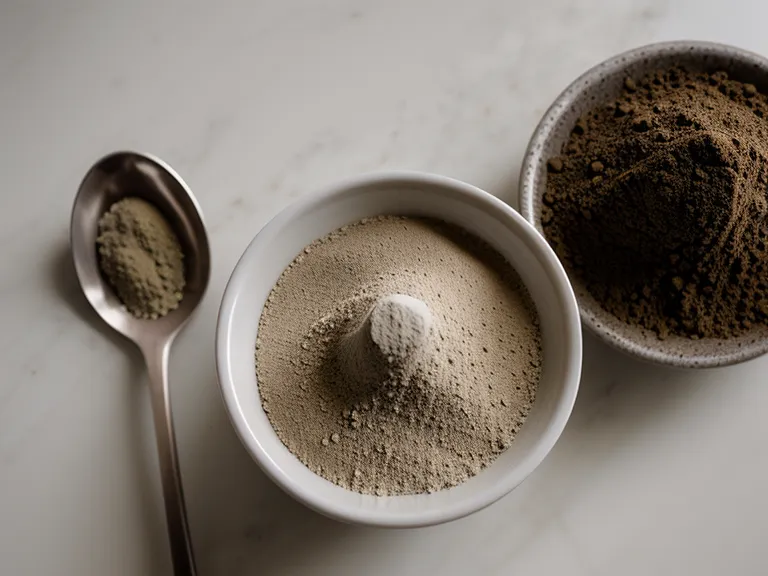
Texture turned out to be the bigger adjustment than taste. The fiber blend has a gritty, slightly earthy quality that hits differently depending on how well I stir it into a full glass of water; under-stirred, it clings to the back of the throat in a way that's hard to ignore. I've tested the difference between gummies and capsules before, and this sits closer to the capsule end of that spectrum: unglamorous, not particularly pleasant, but straightforward about what it is instead of dressing itself up as candy.
Testing SynoGut Against an Irregular Freelance Schedule
Fixed-dose supplement schedules assume a predictable day, and freelance work rarely gives you one. Deadlines eat dinner, sleep shifts by a couple of hours some weeks, and a strict three-times-daily probiotic routine doesn't survive that kind of week intact. What I noticed with SynoGut is that the fiber does more of the heavy lifting than the bacteria count does: Psyllium husk and black walnut hull give the digestive tract something to work with regardless of when you actually take it, the way a grid system holds a layout together even when the content file comes in late.
Prebiotic Fiber Versus a Probiotic Blend, and Why the Difference Matters
There's a real difference between feeding the bacteria already living in your gut and adding new strains on top, and SynoGut leans hard into the first camp with all that fiber; the prebiotic-versus-probiotic question is its own rabbit hole I've mapped out elsewhere, so I'll leave it there for now.
Face-mapping which breakout corresponds to which digestive complaint is a related exercise I use constantly, though it deserves its own full write-up rather than a paragraph here. Strain selection is a similar story: which specific probiotic species actually earns a spot in the rotation is a decision I now make with more care than I used to, and it's detailed enough that it doesn't fit neatly into a supplement breakdown like this one.
Tracking any of this depends on comparing photos taken the same way each time, something I manage with a grid chalked onto the whiteboard above my monitor and updated on a set day each week (my photo archive is at this point less a folder and more a small, slightly concerning museum of my own jawline). The actual method for doing that consistently is a longer explanation than fits here.
How I Actually Layer It With Other Supplements
SynoGut stayed the base of my stack, but I don't run it alone anymore. I added PrimeBiome to the morning rotation for more targeted skin support; if SynoGut is the structural grid, PrimeBiome is closer to the high-resolution image sitting on top of it, aimed more directly at skin than at digestion generally. The full comparison lives in my PrimeBiome review here, including how the two behave together rather than separately.
PrimeBiome comes as a capsule, and it leaves a flat, faintly sweet aftertaste that lingers after I swallow it with a glass of room-temperature water; it's the opposite problem from SynoGut's throat-catching grit, but a problem all the same until you build the habit. Tasha, a fellow designer I still swap supplement notes with, is immediately skeptical of anything that feels overpriced for a bottle of capsules, and she gave SynoGut's price tag a long look before trying it herself. She wasn't wrong to double-check; it's not a casual purchase.
GUT VITA is the other piece, kept in my travel bag for shorter trips because it's easier to pack and a bit friendlier on the budget than SynoGut, even without the same heavy fiber profile. GUT VITA works fine as maintenance, especially right after a flare; I wrote about that specific use case in GUT VITA for post-flare recovery if that's the scenario you're dealing with.
Stopping any of these for a stretch changes things too, and what happens when you stop is a different conversation from what happens when you start. The difference is enough that it's worth its own piece rather than a footnote here.
Is SynoGut Actually the Right Move for You?
If you've already spent real money on topical treatments and your skin still tracks with how your stomach feels that week, the internal side of the equation is worth a look before buying another serum. SynoGut isn't built for hormonal breakouts specifically, and that distinction comes up often with a reader named Pritha Langford, who messages fairly regularly about hormonal acne and always notes that her own doctor has no idea what she's talking about when she brings up her gut. Sorting hormonal acne from gut-related acne is a separate question from anything covered here, but the two aren't automatically the same problem.
Consult your own doctor before starting any new supplement, especially if you already have digestive issues; that part hasn't changed no matter how many spreadsheet rows lean green. Address the plumbing, not just the paint, and if that logic tracks for you, giving SynoGut a try is a reasonable place to start; it runs about seventy dollars a bottle, which lands in the same range as a single higher-end serum, except this one's job is the whole system instead of one symptom.
All opinions and observations on this site are my own and are shared purely for informational purposes. They do not constitute professional medical, financial, or legal advice. Please consult the relevant professional before acting on any information presented here.