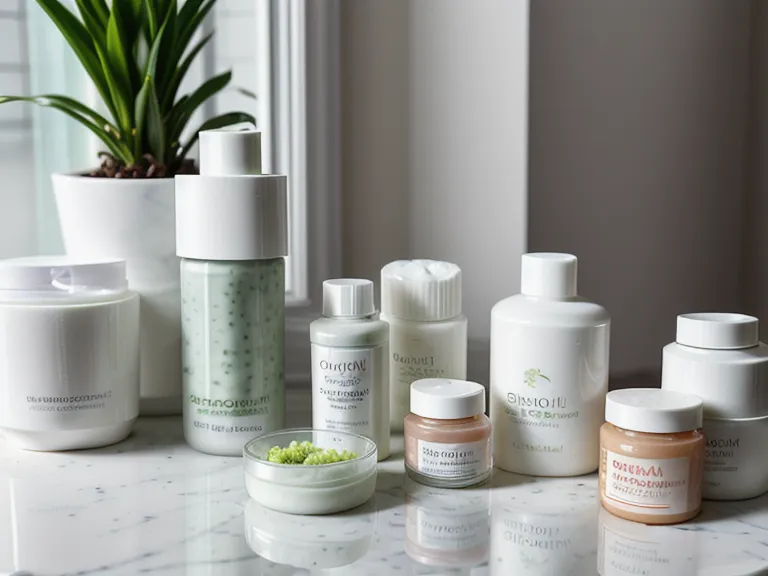
A jar of retinol and a bottle of probiotics don't look like they're solving the same problem, but on my bathroom shelf, they eventually were. I spent most of my late twenties and half my thirties convinced my adult acne was a surface issue — something a stronger serum would fix, if I just found the right one. Every topical I tried followed the same arc: promising for a stretch, then flat, then replaced by the next bottle, a cycle that's worth its own conversation but not this one. It wasn't until I zoomed into a photo of a fresh breakout, expecting the usual solid red patch, and noticed instead that the redness thinned out toward the edges, fading at the jawline like ink running low mid-print, that I started wondering if the actual problem lived somewhere else. That single photo, buried in a phone gallery that's embarrassingly heavy on chin close-ups at this point, is the reason this whole spreadsheet exists, and it's also why I get the same handful of questions about the gut-skin axis, probiotic testing, and adult acne every time someone finds this site. So let's just answer them directly.
Quick disclosure before any of that: some of the links below are affiliate links, meaning I earn a commission if you buy through them, at no extra cost to you. I only write about supplements I've actually put through my own tracking system. I'm a graphic designer, not a doctor, so treat everything here as one person's testing notes — not medical advice — and run anything you're considering past your own physician first.
The Gut-Skin Axis: What I Found
Short answer: for my skin, yes, though the way I got there matters. A friend of mine — the kind who spends her weekends on urban foraging walks with a neighborhood collective, not exactly a background in medicine — brought up the idea over coffee one afternoon along Division Street's coffee row, mostly as a passing comment. I brushed it off for a while. What actually changed my mind wasn't a study or a diagnosis; it was my own gut-skin axis data lining up in a way that felt too consistent to be coincidence.
That pattern read differently than the hormonal breakouts I'd dealt with around certain times of the month — this one tracked closer to how bloated I felt than to any calendar. Bloating and breakouts showed up together often enough that it became its own column in the spreadsheet, separate from anything I could blame on hormones.

The Reddit Rabbit Hole That Wasted My Patience
Before I found anything that worked, I fell hard for a forum thread that swore by megadosing zinc and vitamin D for skin — no probiotic, no gut angle, just supplement stacking based on a few hundred upvotes. I tracked it in the spreadsheet like everything else: dosage, timing, a weekly flare rating. A long stretch of that and my chin looked exactly the same, except now I also had a headache most afternoons and a slightly queasy stomach I chalked up to coincidence for way too long. It taught me something useful, though — throwing more of a good thing at the problem isn't the same as finding the right thing, and that distinction mattered a lot once I actually got to probiotics, because it's tempting to assume more capsules automatically means a better result.
PrimeBiome vs. GUT VITA vs. SynoGut: A Probiotic Review From My Own Supplement Testing
Once I moved past the megadosing detour, the real testing started, split across three products people keep asking me about. Not all "gut health" products are actually built for skin, and that distinction cost me some wasted effort early on, when I mistook a generic fiber supplement for something that would touch my skin the way a targeted probiotic would. Fiber alone just made me bloated; it didn't do much else. What eventually separated the three in my spreadsheet was strain focus more than anything — formulas built around specific strains like Lactobacillus read as more relevant to breakouts than a general fiber blend, though I'll leave the full strain-by-strain breakdown to the article where I actually mapped that out.
PrimeBiome ended up being the one I reached for most, mainly because it's a multi-strain formula built specifically around the gut-skin connection rather than general digestion — think of it like hiring a small design team instead of one freelance illustrator, more coverage across the board even if any single strain's count runs lower than a specialized bottle. GUT VITA was the one I'd point a beginner toward instead: it's the more affordable entry point, genuinely helped with sluggish digestion, and some of that showed up on my skin too, just less directly than with PrimeBiome. SynoGut leaned harder into fiber and general regularity — solid if that's your actual gap, but for the specific "clear my chin" goal it always felt like a supporting player rather than the lead. All three come in capsule form, which is the only format I actually test — gummy probiotics are their own category I skip entirely, mostly because dosing consistency matters more to my spreadsheet than convenience.

Timeline for Seeing Results
Longer than a single bottle, that much I can promise. Skin doesn't turn over overnight, so judging a probiotic after a few days on it is like judging a redesign from the first draft — you're not looking at finished work yet. I stopped grading any product before I'd given it a real, sustained stretch, and that patience is honestly the biggest thing separating people who give up on gut-skin testing early from people who actually see the trend line move. If you stop a probiotic once it's working, don't expect the effect to hold indefinitely either — in my own notes, the improvement flattened out once I paused a bottle, though it didn't reverse dramatically overnight.
Quick Hits: The Other Questions I Get Asked
Digestive enzymes get asked about constantly, though in my own testing they read as more useful for post-meal bloating than for anything that ever showed up on my chin. Prebiotic fiber is worth separating from probiotics too — I went through a stretch mixing a plain prebiotic powder into water, the kind that leaves a slight grit against the glass right before it dissolves, and it felt like feeding the whole system rather than aiming at one specific problem. Rebuilding gut health after a round of antibiotics comes up in my inbox often enough, and the honest answer is I haven't tracked that exact scenario closely enough in my own spreadsheet to say much beyond "give it more room than you think." Where a breakout actually lands on your face, jawline versus forehead versus cheeks, is its own rabbit hole that I've only half-mapped from staring at my own chin close-ups for years. Redness that flares around specific foods gets folded into this same conversation, and it's real enough in my notes, though it's a big enough topic on its own that I've only skimmed it. Rotating what's actually in the cabinet instead of sticking with one bottle forever is something I do on purpose now, mostly to see whether my skin notices the switch. Stress shows up in the log too, not as anything I can explain mechanically, just as a pattern where rough stretches at my desk and rougher skin stretches kept landing on top of each other. Some people call this whole idea "leaky gut," though I've never gone deep into that terminology myself — I just watch results and let the spreadsheet argue the case. Cutting specific foods instead of adding a supplement is the other approach readers ask about, and it's worth trying if you'd rather change your plate than your pill organizer, though I never got as clean a signal from diet changes alone as I did from consistent probiotic testing.
If you want the mechanics of how I actually log any of this — the photo angles, the flare-rating scale, what counts as a real data point versus noise — this breakdown of my tracking strategy covers it in more depth than fits here. And if your skin gets worse before it gets better once you start a new probiotic, that's worth reading about too, because there's a real difference between a temporary adjustment period and a product that's just wrong for you — I wrote about exactly that distinction in the "purge" phase I went through early on, and it's not something to just tough out blindly.

Which One to Buy
For the gut-skin axis side of things specifically — chin and jawline breakouts that no cream ever touched — PrimeBiome is the one my own spreadsheet keeps pointing back to, and the 90-day guarantee gives enough room to actually judge it instead of quitting after one bottle. General digestive sluggishness with skin as a hoped-for bonus is a different problem, and GUT VITA is the cheaper place to start with that instead, while SynoGut still makes sense if fiber and regularity are your actual gap rather than targeted strains.
None of this fixed my skin overnight, and I'm not going to pretend a decade of frustration undoes itself with one supplement order. But treating the problem as something happening inside my body, not just on top of it, finally moved the needle in a way retinol alone never did. Prices and offer details change on the vendor's end from time to time, so it's worth checking the current page directly before you decide, but if you've already tried every cream in the drugstore aisle, this is the direction I'd point you next.
PrimeBiome
Pros
- + Directly targets the gut-skin axis for stubborn breakouts
- + Multi-strain formula provides broad microbial diversity
- + 90-day guarantee covers three full skin renewal cycles
Cons
- ○ Premium positioning requires a committed mindset
- ○ Capsules have a slight metallic aftertaste if not swallowed quickly
All opinions and observations on this site are my own and are shared purely for informational purposes. They do not constitute professional medical, financial, or legal advice. Please consult the relevant professional before acting on any information presented here.