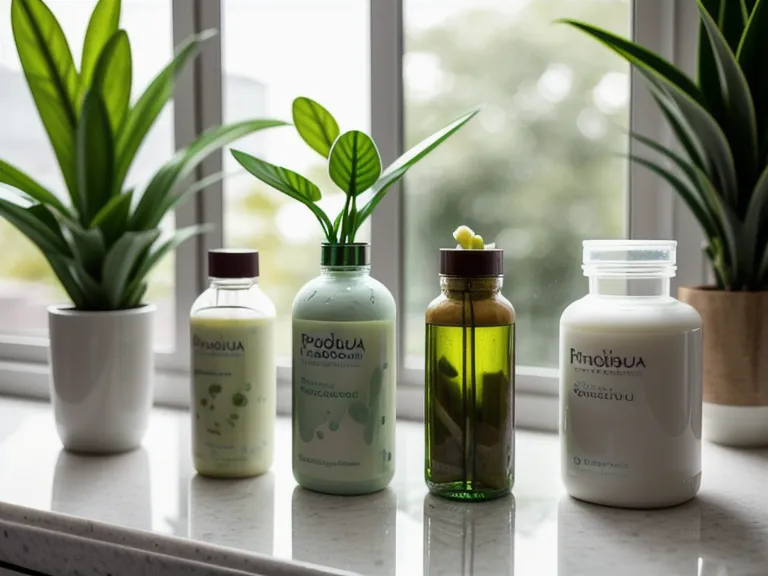
Fourteen columns. That's how many live in the skin-tracking spreadsheet that's supposedly explaining my face, and for a long stretch only three of them ever told me anything true — chin breakout severity, whatever probiotic bottle I was mid-way through, and a digestion note that reads, more often than I'd like, just "meh." This is the honest supplement review that spreadsheet eventually produced: a gut-skin axis experiment run by a graphic designer with zero medical training and a phone camera roll that's an embarrassing shrine to my own jawline.
Quick disclosure before any of this goes further: I use affiliate links here, and if you buy one of the adult acne supplements I've actually tested, I earn a commission at no extra cost to you. I've put my own money into this (more than my boyfriend finds entirely reasonable), so I only link what actually made it past week one in my bathroom cabinet.
My Face Was Never a Skincare Problem
For most of my twenties, I treated my face like a design brief that kept getting revised — a new serum here, a stronger acid there, one dermatologist-approved retinol after another. That cycle, new product, a week of hope, the same cluster back by day ten, turned out to be a pattern with a name, though I only understood that much later. 3 signs the problem wasn't my face wash is the post I wish I'd found years before I actually did.
The closest thing to a real intervention, before I ever considered my gut, was a European facial a very reputable esthetician promised would clear everything in one sitting (the kind of promise that should have been my first red flag). I spent the following three weeks purging worse than when I walked in, and I remember standing in my bathroom convinced I'd made things permanently worse. That's usually where these stories are supposed to include a moment of despair. Mine just included a lot of concealer.
What Was Actually Sitting on My Shelf?

Once I stopped treating this as a skincare problem, the supplement aisle turned into its own chaotic design system — no consistent hierarchy, no clear information architecture, just claims stacked on claims. PrimeBiome was the one I kept coming back to, a multi-strain formula built specifically around the gut-skin connection, sitting at the premium end of the shelf with a 90-day money-back window that gave me enough runway to actually judge it. Dealing with the integumentary system means results take their own sweet time — nobody's face turns around in a weekend, no matter what the label promises.
Tasha — a friend from my old agency days who freelances now too, and who I've swapped supplement notes with ever since — took one look at PrimeBiome's price tag and got immediately suspicious, the way she gets about anything priced like a splurge. I kept Gut Vita around as her kind of pick: a simpler, more affordable formula for the days my digestion felt off in a general way, not a skin-specific one. My SynoGut stretch was more casual probiotic testing than a real trial — it handled overall regularity fine but never felt tuned to the clearer-skin result I actually wanted. Picking a formula by strain rather than brand name turned out to be its own education, one I'm still working through, and I stuck to capsules the entire time, no gummies, a format debate for a different post entirely. I never ran a prebiotic on its own either, a distinction that matters more than the marketing usually admits.
The Week Five Gut-Skin Axis Turning Point

My studio is a converted spare bedroom in Sellwood, and the window behind my monitor faces north, so the light through the sheer curtains stays the same flat Portland gray most mornings — exactly what you want when you're photographing a breakout and don't need flattering shadows lying to you. The current rotation sits on a shelf at the corner of my standing desk, and the whiteboard above my monitor gets redrawn into a fresh grid every Sunday. Eight steps down the hall is the bathroom where the weekly photo happens, same angle every time.
By week five, I noticed the concealer had sat untouched on the counter through an entire Tuesday morning — I hadn't reached for it out of habit, and when I checked the mirror on the way out the door, the cluster along my chin had actually shrunk instead of just changing shade. That's not a revelation, not some finally-I-understand moment. It's just the first Tuesday in five weeks my spreadsheet's chin-severity column dropped instead of holding steady.
I'm not going to walk through the full case for the gut-skin axis here — other pages on this site do that math in more detail — but by week five, mine had made a believer out of me. Some trackers map specific breakout zones to specific gut symptoms with real precision; my spreadsheet never got that granular, it just logged what showed up on my jaw and left it there. My particular method for lining up a jawline photo against a same-day digestion note is its own whole system, one I've detailed elsewhere, and even the child-resistant caps on some of these bottles make a stubborn little pop in an otherwise silent kitchen every morning, a small, absurd ritual for something that's supposedly rewiring my skin.
A reader named Pritha Langford messages me every couple of months about her own hormonal acne, and she always adds, almost like a running joke at this point, that her doctor has no idea what she's talking about when she brings up her gut. That's part of why I keep pointing people toward learning how to tell if my acne was caused by poor gut health instead of assuming every breakout on every face is running the same script.
Stop Cycling, Start Counting Weeks
Somewhere around the one-month mark, before the concealer incident, I hit what I can only call a frustration plateau — my skin hadn't cleared, and I was ready to swap brands entirely. Most people fail here. They "probiotic hop" every few weeks, chasing a new strain the way I used to chase a new serum, and I noticed in my own notes that every swap came with its own small flare-up. Constant switching turned out to be its own kind of stress, not a shortcut past one.
What happens to your skin when you stop taking any of this entirely is a longer, separate story than the one I'm telling here — mine involves backsliding I'd rather not put a number on. The short version is that consistency did more for my jawline than any single ingredient did, which is a maddening thing to learn after months of chasing the "right" formula instead of just sticking with one.
Was It Worth It?

By the time this round of testing wound down, the inflamed cluster that used to define my jawline had mostly retreated, and my bathroom cabinet had turned into a small graveyard of half-used serums next to the one bottle that actually earned its shelf space. PrimeBiome was the only piece of this whole experiment that moved my skin specifically, rather than just my digestion generally — Gut Vita and SynoGut were fine for regularity, but neither had that same targeted effect. If you want the exact day-by-day breakdown, I logged the whole thing in my skin-gut supplement rotation tracking, columns and all.
If there's one thing worth taking from all fourteen columns of this, it's that the fix isn't a better serum — it's picking one gut-focused approach and giving it more time than feels reasonable before you decide it failed. If you're ready to stop cycling through topical fixes and actually test the gut-skin connection for yourself, find the PrimeBiome formula here — it's the one bottle that survived the spreadsheet.
All opinions and observations on this site are my own and are shared purely for informational purposes. They do not constitute professional medical, financial, or legal advice. Please consult the relevant professional before acting on any information presented here.