
My phone's camera roll holds a folder of chin photos my boyfriend refuses to scroll through. That folder is the closest thing I have to real data on adult acne, and it's what pushed me off the skincare shelves and into a running probiotic testing habit — gut-skin axis experiments and supplement review, logged one spreadsheet row at a time.
Quick note before the strain-by-strain breakdown: a few links below are affiliate links, and I earn a commission if you buy through them — I only link things I've actually run through my own tracking, not whatever pays best.
Why Did My Skincare Cabinet Stop Working?
A naturopath friend mentioned it over brunch, almost as an aside — the redness camped along my jawline looked less like a reaction to my cleanser and more like something happening underneath it. Until then, I'd built an entire identity around fixing my face from the outside: new cleansers, new serums, the assumption that the right product was still out there, unpurchased. So I tried the routine that seemed most serious about the problem: the full ten-step Korean double-cleanse, kept up religiously for four months. My skin got cleaner. It did not get calmer. The same jaw cysts showed up on the same schedule, like clockwork that didn't care how many steps I added before it.
That's roughly where the topical side of this story ends for me, and it's a pattern that shows up for a lot of people chasing cystic acne — I've read enough since then to know the failure mode repeats itself with almost eerie consistency, though that's really its own post. I wrote down the early signs that made me suspect my gut instead of my face wash, back when I was still half-convinced I was wasting my time.
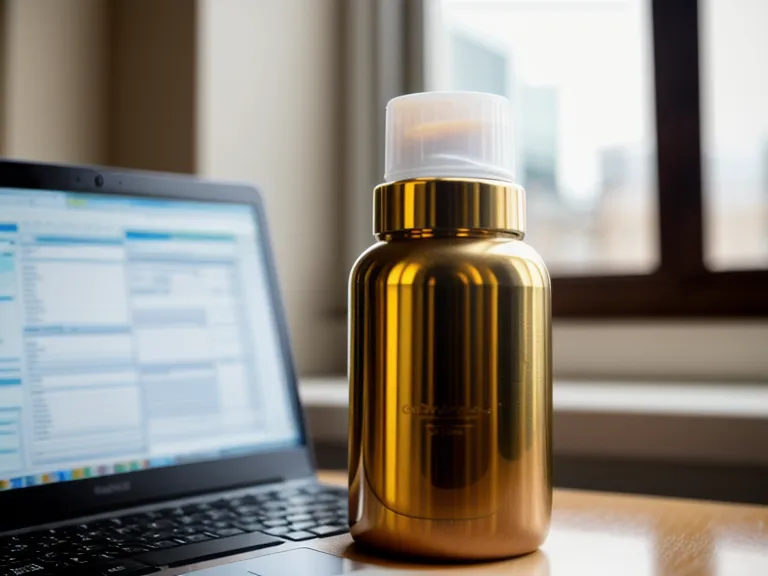
Probiotic Testing, Strain by Strain
Once I accepted the gut angle, I assumed a probiotic was a probiotic, the same way I used to assume any sans-serif font would do for a headline. I bought the biggest bottle on the shelf and started swallowing capsules with breakfast, expecting a straight line to clear skin. What I got instead was a lesson in how strain-specific this actually is. Lactobacillus acidophilus made my digestion feel lighter within days. Bifidobacterium bifidum did something similar. Neither one touched the texture on my chin, and the same jaw breakouts kept arriving on their own schedule regardless.
Somewhere in that stretch I also learned that more isn't automatically better — a few of the broad-spectrum, sky-high-dose blends I tried actually left my skin angrier, not calmer, which was the opposite of what the label promised. There's a whole separate conversation about picking the right probiotic strain for acne specifically, and I won't try to cram a buying guide into a personal update like this one. What mattered for me was narrowing from gut health in general to something built around the gut-skin connection specifically, and that meant learning how to tell whether my breakouts were even gut-related in the first place rather than hormonal or something else entirely. (Worth running any of this by an actual doctor first, especially if there's an existing condition in the mix — I'm a designer with a spreadsheet, not a medical professional.)
Committing to One Formula Instead of Strain-Hopping
Eventually the strain-of-the-month approach stopped making sense — skin turnover isn't instant, and switching formulas every few weeks meant I was never actually finishing an experiment before starting a new one. So I picked one targeted, gut-skin formula and committed to a proper trial: PrimeBiome, taken daily, tracked against the same Sunday photo I'd been taking against my bathroom mirror for months. My friend Tasha Orimoto, a fellow designer who left the same agency I did the same year we both went freelance, was running her own parallel test with a different strain blend, and we'd compare notes over text like two people debugging the same bug in different codebases. (The exact weekly photo-and-log method I use is its own post — here it's just the backdrop.)
By week six, something in my digestion had quietly changed before my skin caught up to it — that mid-afternoon bloated feeling that usually warned me a breakout was coming just wasn't showing up anymore. It's a strange thing to track because it isn't visual; my spreadsheet has a column for it anyway, right next to the photo timestamps, and it started reading "clear" with a consistency I hadn't seen before. I kept going past that point instead of declaring victory early, because one good week has fooled me before.

CFU Counts Matter Less Than I Thought
The number printed on the label used to be the only thing I compared — bigger felt like it had to be better, the same instinct that makes people assume a heavier stock always makes a nicer business card. What actually seemed to matter more, based on what changed and what didn't across my own bottles, was whether the strains survived long enough to do anything at all, not how impressive the count looked on the bottle. Refrigerated versions ended up on the shelf by my desk, in the spot I'd cleared for whatever's currently in rotation, so I'd actually see them before starting work instead of forgetting they existed in a warm bathroom cabinet.
Prebiotics came up in the same research rabbit hole, but they're not interchangeable with probiotics — one feeds what's already there, the other adds new strains — though that distinction deserves its own full write-up more than a paragraph here. For anyone testing on a tighter budget, GUT VITA was where I'd point a beginner: it's a general digestive formula rather than anything built specifically for skin, but I noticed it helped with the bloating-breakout pattern that used to wreck my Mondays. For the specific, stubborn jaw cysts, the more targeted formula was what actually moved my spreadsheet. (Delivery format — capsules versus other options — is a separate rabbit hole I stuck with out of habit rather than testing head-to-head.)

The Appointment Where My Dermatologist Finally Got an Answer
Months into the trial, my dermatologist asked what had changed, and for the first time in years I actually had an answer instead of a shrug. I told her about the gut-skin testing, the strain-switching, the spreadsheet — she didn't roll her eyes, which I'd half expected. That exchange is the closest thing I have to outside proof that this wasn't just me seeing what I wanted to see in my own bathroom mirror photos.
The jaw stayed clear through that stretch in a way it hadn't on any topical routine, cystic double-cleanse included. Cystic acne along the chin and jawline behaves differently than surface breakouts, in my experience — it doesn't respond to scrubbing harder or layering on another acid, because scrubbing was never the actual problem. That's the piece I wish someone had told me a decade earlier instead of another serum recommendation. (There's also a whole way of reading where a breakout shows up — chin, jaw, cheeks — as a map back to digestion, which is a bigger topic than this post.)

The One Lesson My Spreadsheet Taught Me
A reader named Pritha Langford messaged me a while back, after coming across the post where my retinol routine fell apart against this same gut-skin backdrop. She runs her own three-month trials before drawing conclusions about her hormonal acne, which is a more patient approach than most of what gets recommended online — myself included, back in my strain-hopping era. Talking with her is what clarified that the lesson here isn't really about probiotics specifically.
The actual takeaway, the one I'd hand to anyone starting this process, is to finish one full trial before switching — pick a formula, give it real time, and let the spreadsheet, or even just your memory, tell you honestly whether anything moved, instead of chasing the next strain because the current one hasn't worked yet after two weeks. If you want to start where I did, PrimeBiome is the formula that got me to that dermatologist appointment with an actual answer, and it's worth giving it the same three-month runway I did rather than judging it at three weeks. (What happens if I ever stop for good is a separate experiment I haven't run yet.) My camera roll still has the chin folder in it. It's just no longer the only thing in there worth looking at.
All opinions and observations on this site are my own and are shared purely for informational purposes. They do not constitute professional medical, financial, or legal advice. Please consult the relevant professional before acting on any information presented here.